
 (excl. BMX)
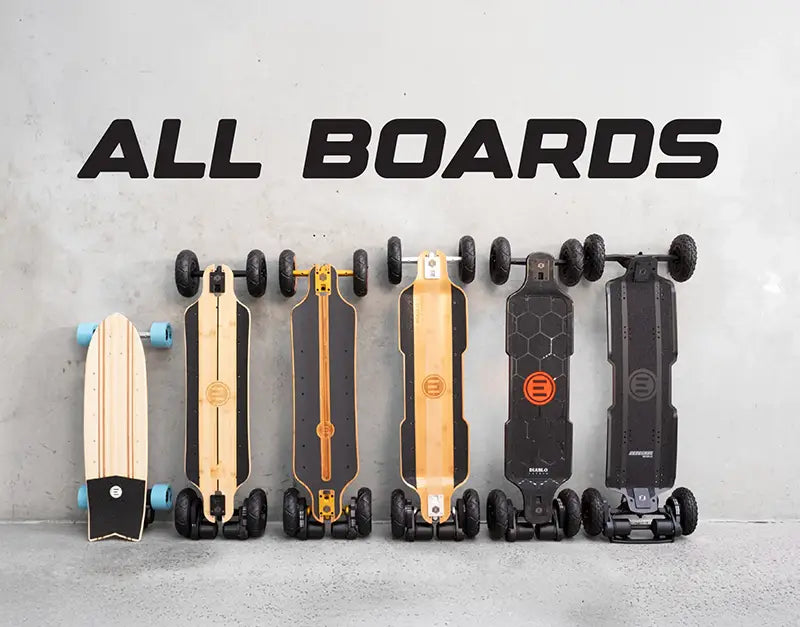
What a decade of electric skateboarding actually changed

What a decade of electric skateboarding actually changed
Ten years ago, an electric skateboard was a genuine gamble. You bought into a category that barely had a track record, built on batteries that degraded fast, controllers that overheated, and decks that were really just modified longboards with a motor bolted on. The riders who bought in early were testing the product as much as using it. That is no longer true, and the gap between those early boards and what exists now is bigger than most people realise.
It is easy to assume progress in this category means "faster" or "longer range", and those things have improved. But the more interesting story is what changed underneath those headline numbers: the reliability, the control systems, and the way a board actually behaves when you are riding it rather than reading about it.
Battery chemistry stopped being the weak link
Early electric skateboards used whatever cells were cheap and available, and it showed. Range dropped noticeably after a few months of regular use, cold weather made things worse, and a hard commute in Wellington's hills could leave a rider stranded halfway home. Modern lithium cell chemistry, like the Samsung 50S cells now common across the category, holds voltage far more consistently under load. That matters more than the headline range figure. A battery that delivers close to its rated output on hill fifteen the same way it did on hill one is a completely different riding experience to one that fades as it drains.
Capacity has grown too. Boards that once carried 300 to 400Wh batteries in a compact format now commonly carry 600 to 900Wh, without a dramatic jump in overall weight. That shift alone has done more to reduce range anxiety than any marketing claim. A rider commuting through Hamilton on flat, sealed roads can now comfortably do a return trip without thinking about the battery gauge, something that would have required careful planning a decade ago.
Motor and controller technology made boards genuinely rideable, not just fast
Top speed used to be the number everyone quoted, but it was rarely the number that mattered. Early controllers delivered power abruptly, which made low-speed control twitchy and high-speed braking unpredictable. Field-oriented control, now standard across serious electric skateboards, changed that completely. Power delivery became smooth rather than binary, which means a beginner can modulate throttle gently and a confident rider can lean into acceleration without the board lurching.
Braking improved just as much. Dual motor setups producing 6000 to 7000W combined, paired with proper regenerative braking, give riders genuine stopping control on descents, which matters a great deal on the steeper streets around Wellington or the long, undulating roads outside Queenstown. A decade ago, braking on a steep hill was something you managed carefully. Now it is something the board handles well enough that you can focus on the ride itself.
Terrain stopped being a limitation
The biggest practical shift for New Zealand riders has been terrain flexibility. Early electric skateboards were built almost exclusively for smooth, sealed surfaces, which meant anyone riding gravel paths, grass, or rougher tracks was largely out of luck. All-terrain pneumatic tyres changed that. A 175mm pneumatic tyre absorbs the kind of surface irregularity that would have rattled a rider straight off a hard urethane wheel a decade ago.
This matters practically in a country where riding surfaces vary a lot within a single trip. Someone riding around Christchurch might move between smooth cycleways and rougher park paths in the same session. All-terrain setups, and the rise of proper 2-in-1 configurations that let a rider swap between street wheels and pneumatic tyres on the same board, mean people are no longer choosing a single-purpose board and hoping it covers everything they want to do.
Deck construction changed how boards feel, not just how they perform
Deck material used to be an afterthought bolted around the electronics. Now it is a genuine design decision. Bamboo decks with layered fibreglass give a natural flex that absorbs road vibration and makes carving feel intuitive, closer to a traditional longboard than a rigid platform. Carbon fibre decks, by contrast, offer zero flex and complete rigidity, which translates into stability at higher speed and more predictable handling on rougher terrain.
That distinction did not really exist a decade ago in any meaningful way. Riders now choose a deck material based on the kind of feel they actually want underfoot, which is a much more mature way to think about a board than simply comparing top speed figures.
Weight came down while capability went up
One of the more underrated shifts is weight. A decade ago, adding a bigger battery or stronger motors usually meant a heavier board, which made everyday portability a genuine compromise. Improvements in cell energy density and motor design mean modern boards now carry considerably more power and capacity without the corresponding jump in weight. Boards that weigh 12 to 14kg fully built, complete with dual motors and a 600Wh-plus battery, would have seemed unrealistic ten years ago. For someone carrying a board onto a bus in Auckland or up a few flights of stairs, that difference is felt every single day, not just spoken about in a spec sheet.
Software turned boards into something you can actually understand
The last major shift is less visible but arguably just as important. Bluetooth connectivity and companion apps now let riders see real ride data: actual range consumed, battery health, firmware updates, and riding mode customisation, all from a phone. A decade ago, a board was a sealed unit. If something felt off, you had no way to diagnose it yourself. Now a rider can genuinely understand how their board is performing on their own regular routes, which builds a kind of trust and familiarity that simply did not exist in the early years of the category.
None of this means electric skateboards became simple. They are still mechanical, battery-powered vehicles that need care and sensible use. But the category matured from a novelty with real limitations into something that behaves consistently, rides predictably, and adapts to genuinely different terrain and rider needs. That is the real story of the last decade, not a single spec that doubled, but a product that finally became dependable enough to build a daily habit around.
-
Posted in
electric skateboard, evolve
